
A nonprofit division of Sevadar Foundation Inc.

For clinicians  ·  For facilities  ·  For families  ·  For staff

Category: Uncategorized

  • Older man in conversation with a clinician in a white coat across a desk in a consulting room

    A taper is arithmetic. Treating the reason is not.

    A dose reduction is not a treatment. It is a change to one number, and whether it helps or harms depends entirely on what else was changed at the same time.

    Before you read on

    Never stop or change a prescribed medication without speaking to your own prescriber. Opioids cause a withdrawal syndrome when stopped abruptly and have to be reduced gradually under supervision. Nothing here is advice about your own medication.

    What the tapering data actually say

    This site’s tapering principles hold that a taper and a withdrawal differ by four things: agreement, rate, monitoring, and a way back. The opioid literature is where that claim has been most expensively tested.

    In a retrospective cohort of 113,618 adults on stable long-term therapy at 50 morphine milligram equivalents a day or more, tapering was associated with an adjusted 9.3 overdose or withdrawal events per 100 person-years against 5.5 in non-tapered periods (aIRR 1.68), and 7.6 mental health crisis events against 3.3 (aIRR 2.28). Rate mattered independently: each 10% increase in maximum monthly dose-reduction velocity carried an aIRR of 1.09 for overdose and 1.18 for mental health crisis.

    A companion analysis followed the same population further out and found the elevated rates persisting into the second year after taper initiation — 1.57 for overdose or withdrawal and 1.52 for mental health crisis, comparing post-induction with pre-taper periods.

    Both are observational, and the authors say so. Sicker patients get tapered, and that confounding cannot be fully removed. But the direction is consistent, the dose-response on velocity is what you would predict if the mechanism were real, and nothing in the deprescribing literature suggests the opposite.

    The lever that is not the dose

    The policy response of the last fifteen years treated quantity as the only available variable. It is not the only one, and the alternative is not a slower version of the same manoeuvre.

    Sustained opioid exposure produces tolerance, in which the drug still works but more is required, and can produce opioid-induced hyperalgesia, in which the nervous system is recalibrated toward pain and additional drug makes it worse. The mechanisms proposed for the latter centre on the central glutamatergic system and NMDA receptor activation, spinal dynorphin, and descending facilitation. Where hyperalgesia is operating, one review states plainly that further opioid prescribing is largely futile.

    The clinically useful consequence is the one that gets least attention: a 2019 review notes that interventional techniques which reduce pain input can permit a dose decrease and, in doing so, revert the mechanisms producing tolerance and hyperalgesia. The dose falls because the input fell. That is a different event from a taper, and it is the event the four conditions above are trying to approximate when no such option exists.

    A worked example, with its limits stated

    On International Overdose Awareness Day in August 2026, Dr. Gurpreet Singh Padda — who directs the clinical positions this site is built on — published the opioid figures from his interventional pain practice.

    • Average arrival: more than 90 MME per day, after more than two and a half years in pain.
    • 21% completely off opioid pain medication within 90 days of active interventional treatment; 34% within one year.
    • Of those not fully weaned, the large majority held below 30 MME per day.

    These are practice-reported figures from a single population, not trial outcomes, and individual results vary. There is no control arm, no independent adjudication and no randomization; they cannot be read as evidence that this approach outperforms another. What they do illustrate is the mechanism — a population in which the dose fell as a downstream consequence of treating pain generators, rather than as the primary intervention. Reported by AP News; full release.

    For contrast on what dose reduction achieves without that: a randomized trial of a group-based self-management programme in 608 primary-care patients on strong opioids produced a large increase in discontinuation at 12 months (29% versus 7%) and no improvement in pain interference. Getting people off the drug and improving their lives are two different endpoints, and they can move independently.

    What this means in an older population

    The patients this site concerns are rarely on opioids alone. They are on opioids inside a list, frequently with sedatives, and the interaction risk is what turns a modest dose into a fall or a delirium. That argues for reduction. The tapering data argue for reducing carefully, with monitoring and a way back — and for asking, before starting, what is generating the pain and whether anything can be done about it directly. See opioids in older adults and the deprescribing framework.

    The summary a prescriber can act on: a taper is arithmetic, and arithmetic performed on a patient whose pain generator is untreated is the scenario the cohort studies were measuring.

    References

    1. Agnoli A, Xing G, Tancredi DJ, Magnan E, Jerant A, Fenton JJ. Association of dose tapering with overdose or mental health crisis among patients prescribed long-term opioids. JAMA. 2021;326(5):411–419. PMID 34342618 · DOI 10.1001/jama.2021.11013.
    2. Fenton JJ, Magnan E, Tseregounis IE, Xing G, Agnoli AL, Tancredi DJ. Long-term risk of overdose or mental health crisis after opioid dose tapering. JAMA Network Open. 2022;5(6):e2216726. PMID 35696163 · DOI 10.1001/jamanetworkopen.2022.16726.
    3. Mercadante S, Arcuri E, Santoni A. Opioid-induced tolerance and hyperalgesia. CNS Drugs. 2019;33(10):943–955. PMID 31578704 · DOI 10.1007/s40263-019-00660-0.
    4. Colvin LA, Bull F, Hales TG. Perioperative opioid analgesia — when is enough too much? A review of opioid-induced tolerance and hyperalgesia. The Lancet. 2019;393(10180):1558–1568. PMID 30983591 · DOI 10.1016/S0140-6736(19)30430-1.
    5. Lee M, Silverman SM, Hansen H, Patel VB, Manchikanti L. A comprehensive review of opioid-induced hyperalgesia. Pain Physician. 2011;14(2):145–161. PMID 21412369.
    6. Sandhu HK, Booth K, Furlan AD, et al. Reducing opioid use for chronic pain with a group-based intervention: a randomized clinical trial. JAMA. 2023;329(20):1745–1756. PMID 37219554 · DOI 10.1001/jama.2023.6454.

    Bibliographic records in this note were retrieved from PubMed. Every reference links to its PubMed record and DOI.


  • A top view on charts and smartphone in an office.

    The 100,000 hospitalizations figure is real. The argument built on it usually is not.

    The most quoted number in this field is that adverse drug events cause roughly 100,000 emergency hospitalizations a year among older Americans. The number is real. The argument that usually follows it is not.

    The number

    National active surveillance data for adults aged 65 and over produced an estimate of 99,628 emergency hospitalizations per year for adverse drug events (95% CI 55,531 to 143,724), with 48.1% of those in adults aged 80 and over. That is a sound figure from a sound study.

    What the same study found about which drugs

    Four drugs or classes accounted for 67.0% of those hospitalizations: warfarin 33.3%, insulins 13.9%, oral antiplatelets 13.3% and oral hypoglycemics 10.7%.

    And the sentence that almost never travels with the headline figure: “High-risk medications were implicated in only 1.2% (95% CI, 0.7 to 1.7) of hospitalizations.” A 2016 update using the same surveillance system put medications on the Beers “always avoid” list at 1.8% of emergency department visits for adverse drug events.

    Why this matters for a deprescribing program

    The argument usually built on the 100,000 figure runs: adverse drug events cause enormous harm, therefore we should reduce potentially inappropriate prescribing. The first half is true. The second does not follow from it, because the drugs causing that harm are overwhelmingly anticoagulants and diabetes agents — drugs that in most cases should not be stopped.

    What those drugs need is better dosing, better monitoring, better follow-up on renal function and on hypoglycemia. That is a different program from a Beers-list review, it requires different work, and pointing the 100,000 figure at the Beers list actively directs attention away from where the harm is.

    The honest version

    There are strong reasons to review and reduce potentially inappropriate prescribing in older adults. The best of them is that a large share of long-term care prescriptions are treating nothing at all — 65.3% of proton pump inhibitor prescriptions in one US skilled-nursing study had no supporting diagnostic code. A drug treating nothing carries only risk, and that argument does not need to borrow a statistic that is about something else.

    Read more: The AGS Beers Criteria — what it is and what it is not.

    References

    1. Budnitz DS, Lovegrove MC, Shehab N, Richards CL. Emergency hospitalizations for adverse drug events in older Americans. The New England Journal of Medicine. 2011;365(21):2002–2012. PMID 22111719 · DOI 10.1056/NEJMsa1103053.
    2. Shehab N, Lovegrove MC, Geller AI, Rose KO, Weidle NJ, Budnitz DS. US Emergency Department Visits for Outpatient Adverse Drug Events, 2013-2014. JAMA. 2016;316(20):2115–2125. PMID 27893129 · DOI 10.1001/jama.2016.16201.
    3. Patterson Burdsall D, Flores HC, Krueger J, et al. Use of proton pump inhibitors with lack of diagnostic indications in 22 Midwestern US skilled nursing facilities. Journal of the American Medical Directors Association. 2013;14(6):429–432. PMID 23583000 · DOI 10.1016/j.jamda.2013.01.021.
    4. By the 2023 American Geriatrics Society Beers Criteria Update Expert Panel. American Geriatrics Society 2023 updated AGS Beers Criteria for potentially inappropriate medication use in older adults. Journal of the American Geriatrics Society. 2023;71(7):2052–2081. PMID 37139824 · DOI 10.1111/jgs.18372.

    Bibliographic records in this note were retrieved from PubMed. Every reference links to its DOI or PubMed record.

  • A pharmacist hands medication to a customer at a classic vintage pharmacy counter.

    There is no 2026 Beers Criteria

    If you have seen something called “The 2026 AGS Beers Criteria,” it is not an American Geriatrics Society publication. There is no 2026 edition.

    What is actually current

    The current edition is the 2023 update, published in the Journal of the American Geriatrics Society. Before it, 2019. The Society publishes on a multi-year cycle and has not issued a 2026 edition.

    What did appear in 2025 is a separate document: an Alternatives List, offering pharmacologic and non-pharmacologic substitutes for medications the criteria flag. It is a companion to the 2023 criteria, not a replacement for them, and citing it as a new edition is an error.

    Why it matters more than a citation nitpick

    Because these criteria get embedded in policies, order sets and audit tools, and a policy citing a version that does not exist cannot be traced back to anything. On a clinical page or in a facility protocol, the version and year are the load-bearing part of the citation.

    The same caution applies to STOPP/START, where criteria counts from superseded versions circulate widely and get attached to the wrong version. Version 3 was published in 2023, and it has a published correction that should be cited alongside it.

    And what the Society says about how to use it

    Worth repeating whenever the list is quoted: the criteria “should be applied thoughtfully and in a manner that supports, rather than replaces, shared clinical decision-making.” They also explicitly exclude hospice and end-of-life care, an exclusion that is routinely ignored.

    Read more: The AGS Beers Criteria · STOPP/START.

    References

    1. By the 2023 American Geriatrics Society Beers Criteria Update Expert Panel. American Geriatrics Society 2023 updated AGS Beers Criteria for potentially inappropriate medication use in older adults. Journal of the American Geriatrics Society. 2023;71(7):2052–2081. PMID 37139824 · DOI 10.1111/jgs.18372.
    2. By the 2025 AGS Alternative Treatments Panel. Alternative Treatments to Selected Medications in the 2023 American Geriatrics Society Beers Criteria. Journal of the American Geriatrics Society. 2025;73(9):2657–2677. PMID 40697073 · DOI 10.1111/jgs.19500.
    3. O’Mahony D, Cherubini A, Guiteras AR, et al. STOPP/START criteria for potentially inappropriate prescribing in older people: version 3. European Geriatric Medicine. 2023;14(4):625–632. PMID 37256475 · DOI 10.1007/s41999-023-00777-y. See also the published correction, Eur Geriatr Med. 2023;14(4):633, PMID 37326916.

    Bibliographic records in this note were retrieved from PubMed. Every reference links to its DOI or PubMed record.

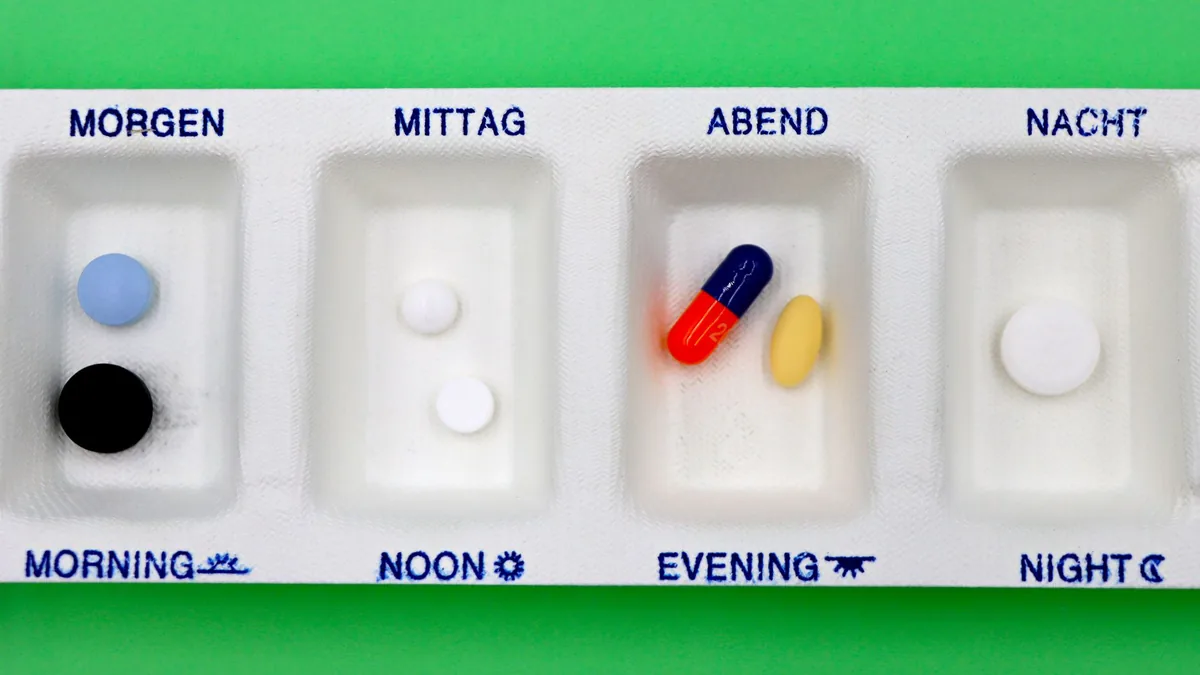
  • A daily medication organizer with pills for different times, set against a green backdrop.

    What the CDC said about the misapplication of its own guideline

    The CDC did something unusual in 2022. It published a guideline that described, in its own text, how its previous guideline had been misapplied and what that misapplication cost patients.

    The passage

    From the 2022 Clinical Practice Guideline for Prescribing Opioids for Pain:

    “Of particular concern, some policies purportedly drawn from the 2016 CDC Opioid Prescribing Guideline have been notably inconsistent with it and have gone well beyond its clinical recommendations. Such misapplication includes extension to patient populations not covered in the 2016 CDC Opioid Prescribing Guideline (e.g., cancer and palliative care patients), rapid opioid tapers and abrupt discontinuation without collaboration with patients, rigid application of opioid dosage thresholds, application of the guideline’s recommendations for opioid use for pain to medications for opioid use disorder treatment, duration limits by insurers and pharmacies, and patient dismissal and abandonment. These actions are not consistent with the 2016 CDC Opioid Prescribing Guideline and have contributed to patient harm, including untreated and undertreated pain, serious withdrawal symptoms, worsening pain outcomes, psychological distress, overdose, and suicidal ideation and behavior.”

    What changed as a result

    • Dosage thresholds were removed from the recommendation statements, deliberately, “to discourage the misapplication of opioid pain medication dosage thresholds as inflexible standards.”
    • Tapering recommendations were substantially expanded.
    • The recommendation on not stopping abruptly is explicit: “Unless there are indications of a life-threatening issue such as warning signs of impending overdose… opioid therapy should not be discontinued abruptly, and clinicians should not rapidly reduce opioid dosages from higher dosages.”
    • The guideline states its own status: it “should not be applied as inflexible standards of care” by health systems, pharmacies, payers, or any level of government.

    Why this belongs on a long-term care site

    Because the mechanism that produced the harm is not specific to opioids. It was a number applied to a population, without the individual entering the calculation, by people who had never met them. A nursing home pursuing a percentage reduction on any drug class is running the same mechanism, in a population less able to object.

    The withdrawal evidence for antipsychotics illustrates the point precisely: most residents can come off safely, and a specific, identifiable minority — those who responded well to the drug, and those with more severe baseline symptoms — are likelier to relapse. A program chasing the number finds them the hard way, and their relapse does not appear in the measure.

    Read more: Opioids in older adults · Measuring what changed.

    References

    1. Dowell D, Ragan KR, Jones CM, Baldwin GT, Chou R. CDC Clinical Practice Guideline for Prescribing Opioids for Pain — United States, 2022. MMWR Recommendations and Reports. 2022;71(3):1–95. PMID 36327391 · DOI 10.15585/mmwr.rr7103a1.
    2. Agnoli A, Xing G, Tancredi DJ, Magnan E, Jerant A, Fenton JJ. Association of Dose Tapering With Overdose or Mental Health Crisis Among Patients Prescribed Long-term Opioids. JAMA. 2021;326(5):411–419. PMID 34342618 · DOI 10.1001/jama.2021.11013.
    3. Oliva EM, Bowe T, Manhapra A, et al. Associations between stopping prescriptions for opioids, length of opioid treatment, and overdose or suicide deaths in US veterans: observational evaluation. BMJ. 2020;368:m283. PMID 32131996 · DOI 10.1136/bmj.m283.
    4. Van Leeuwen E, Petrovic M, van Driel ML, et al. Withdrawal versus continuation of long-term antipsychotic drug use for behavioural and psychological symptoms in older people with dementia. Cochrane Database of Systematic Reviews. 2018;3(3):CD007726. PMID 29605970 · DOI 10.1002/14651858.CD007726.pub3.

    Bibliographic records in this note were retrieved from PubMed. Every reference links to its DOI or PubMed record.

  • A pharmacist in a white uniform hands medication to a customer across the counter.

    Read the medication list in date order

    Sort the medication list by start date. That is the whole technique, and it takes about five minutes.

    Why sort order changes what you can see

    A list sorted alphabetically, or grouped by drug class, is optimized for finding a drug you already have in mind. A list sorted by the date it was started is optimized for finding a pattern — and the two most consequential patterns in a long medication list are both patterns in time.

    The prescribing cascade

    A drug causes a symptom. The symptom is read as a new condition. The new condition is treated. Every step is defensible; nobody made an error; and the sequence is invisible unless somebody looks at the order.

    What you are looking for is a medication started within weeks to a few months of another, treating a recognized effect of the earlier one, with no note recording that the earlier drug was reconsidered first. That last part is the diagnostic bit. “Reviewed X, symptom persisted, adding Y” is not a cascade. Silence is.

    The substitution

    The other pattern is a drug appearing as another one is reduced. It is easy to miss because it looks like success on the class you were watching.

    The clearest documented example: among Ontario nursing home residents dispensed an opioid between 2009 and 2020, concurrent benzodiazepine use fell by 53.2% in relative terms while concurrent gabapentinoid use rose by 505.4%. In US nursing homes in 2021, gabapentin was the agent most frequently involved in central nervous system polypharmacy. A class was reduced and the burden reappeared under a different heading.

    The exercise

    For every drug started in the past two years, ask what happened in the eight weeks before it. That is it. It is the highest-yield five minutes available in a medication review, and it requires no tool.

    Read more: Prescribing cascades · The medication review.

    References

    1. Hogan DB, Campitelli MA, Bronskill SE, et al. Trends and correlates of concurrent opioid and benzodiazepine and/or gabapentinoid use among Ontario nursing home residents. Journal of the American Geriatrics Society. 2023;71(8):2462–2475. PMID 36942992 · DOI 10.1111/jgs.18320.
    2. Jung H, Liu SH, Hume AL, et al. The Prevalence of Central Nervous System-Active Polypharmacy in US Nursing Homes. Journal of the American Medical Directors Association. 2026;27(6):106178. PMID 41895707 · DOI 10.1016/j.jamda.2026.106178.
    3. By the 2023 American Geriatrics Society Beers Criteria Update Expert Panel. American Geriatrics Society 2023 updated AGS Beers Criteria for potentially inappropriate medication use in older adults. Journal of the American Geriatrics Society. 2023;71(7):2052–2081. PMID 37139824 · DOI 10.1111/jgs.18372.

    Bibliographic records in this note were retrieved from PubMed. Every reference links to its DOI or PubMed record.

  • Elderly woman and caregiver in conversation inside a room in Karviná, Česko.

    The nursing home antipsychotic measure changed on January 1, 2026

    If you track the national nursing home antipsychotic rate, the number you are looking at after January 1, 2026 is not measuring the same thing as the number before it.

    What changed

    The long-stay antipsychotic quality measure was respecified effective January 1, 2026. Two changes matter.

    • The numerator now draws on pharmacy claims as well as the resident assessment item.
    • The diagnosis exclusions now require corroboration. Under the previous specification, a coded diagnosis of schizophrenia, Tourette syndrome or Huntington’s disease on the assessment excluded a resident from the measure. Under the current one, the exclusion requires both the assessment item and a matching diagnosis in claims and encounter data.

    Why it changed

    In January 2023 CMS announced audits of schizophrenia coding, stating that it “is concerned that some nursing homes have erroneously coded residents as having schizophrenia, which can mask the facilities’ true rate of antipsychotic medication use,” and that “when nursing home residents are given erroneous schizophrenia diagnoses, they are subject to poor care and unnecessary antipsychotic medications, both of which can be very dangerous.” Its pilot audit found “an absence of comprehensive psychiatric evaluations and behavior documentation,” with recorded behaviors “related to dementia, rather than schizophrenia.”

    The practical consequence

    Do not plot figures from the two specifications on one line. The internally consistent national series is the one CMS reports for the Partnership: 23.9% in the fourth quarter of 2011 falling to 14.2% in the second quarter of 2025, a relative decrease of 40.6%. Figures produced under the new specification are higher for a methodological reason and not because prescribing rose.

    CMS states plainly, and it is worth quoting when a facility feels pressure from this number, that circumstances exist where clinical indications for antipsychotics are present and that it “does not expect that the national prevalence of antipsychotic medication use will decrease to zero.”

    The larger point

    A measure creates pressure toward the measured number, and the pressure lands on whoever is closest to it. The coding problem CMS describes is what that pressure produced last time. A measure that is harder to game is an improvement; it is not a substitute for reviewing each resident individually, and the withdrawal evidence is specific about who relapses when a program stops doing that.

    Read more: Antipsychotics and mortality in dementia · Measuring what changed.

    References

    1. Centers for Medicare & Medicaid Services. Adjusting Quality Measure Ratings Based on Erroneous Schizophrenia Coding, and Posting Citations Under Dispute. Memorandum QSO-23-05-NH, January 18, 2023. cms.gov. 2023. https://www.cms.gov/files/document/qso-23-05-nh-adjusting-quality-measure-ratings-based-erroneous-schizophrenia-coding-and-posting.pdf.
    2. Centers for Medicare & Medicaid Services. National Partnership to Improve Dementia Care in Nursing Homes: Antipsychotic Medication Use Data Report. cms.gov. 2026. https://www.cms.gov/files/document/data-report-national-partnership-improve-dementia-care-nursing-homes-antipsychotic-medication-use.pdf.
    3. Van Leeuwen E, Petrovic M, van Driel ML, et al. Withdrawal versus continuation of long-term antipsychotic drug use for behavioural and psychological symptoms in older people with dementia. Cochrane Database of Systematic Reviews. 2018;3(3):CD007726. PMID 29605970 · DOI 10.1002/14651858.CD007726.pub3.

    Bibliographic records in this note were retrieved from PubMed. Every reference links to its DOI or PubMed record.